
Two Hungarian Participants at the International Poetry Festival in China – How Can Poetry Convey the Stories of the World?
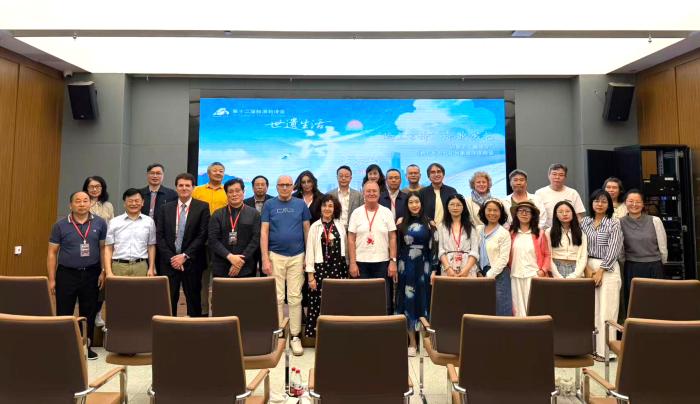
The 12th International Poetry Festival was held on Gulangyu Island, China, from April 26 to 28, 2024. The daily roundtable discussions took place between 10:00 a.m. and 11:30 a.m. in the second-floor lecture hall of the Bagua Lou—also known as the Octagonal Pavilion.
The festival brought together Chinese and foreign poets as well as literary scholars. Among them were the internationally renowned Attila F. Balázs and Zoltán Böszörményi. The organizers did not intend to compete with the poetry festival held every December in Shanghai; rather, they placed the emphasis on dialogue.
This year’s guest of honor was Gu Bin, known internationally as Wolfgang Kubin—a sinologist, poet, literary scholar, renowned researcher of Chinese literature, and former professor at the University of Bonn. His presence had a palpable impact on the participants and underscored the festival’s international character. The three-day program was organized around three roundtable discussions, which examined current issues in poetry, cultural identity, the significance of world heritage, and the state of reading in an accelerating world.
The first discussion, titled “New Era, New Context: Opportunities and Challenges in Chinese Poetry,” was moderated by Wang Shan. Participants included Gu Bin (Wolfgang Kubin), Yang Biwei, Yasef Ananda, and the American poet Gjekë Marinaj. In his opening remarks, Wang Shan highlighted the theme of “innovation and breakthrough,” referencing the World Heritage setting of Gulangyu. The keynote address was delivered by Gu Bin, titled “The Dilemmas and Opportunities of Chinese Poetry’s International Voice.” During the roundtable discussion, topics included the cultural identity of Chinese poetry in the age of globalization, new forms of expression in young poetry, the question of connecting with the audience, and how poetry can relate to the broader cultural context. The closing thought of the discussion was that poetry “draws sustenance from the times and opens up to the world.”
The second roundtable discussion was titled “How Does Poetry Convey the Stories of World Heritage?” and was moderated by Zhao Lihong. Participants included Zhou Qingrong, Hu Xian, the Italian poet and archaeologist Flaminia Cruciani, the North Macedonian writer, poet, literary translator, and essayist Igor Radev, and the French philosopher, writer, and essayist Sonia Bressler. S
Starting from the cultural values of Gulangyu, the discussion explored how poetry can become a mediator of World Heritage stories.
Cruciani’s keynote lecture was titled “Archeology and Poetry: A Dual Reading of World Heritage Stories.” Participants discussed local forms of poetic representation of Gulangyu, the possibilities for multilingual translation and dissemination of World Heritage “classics,” and new ways of connecting poetry and World Heritage. In his closing remarks, Zhao Lihong emphasized that poetry has the power to make World Heritage “experiential, communicable, and accessible.”
The title of the third roundtable discussion was: The Aesthetics of Poetry and Deep Reading in an Accelerated World—moderated by Mu Ting. Participants included literary scholar and critic Sun Jilin, poets Leng Bingchuan and Lan Ye, as well as internationally renowned Hungarian poets Attila F. Balázs and Zoltán Böszörményi, and Spanish poet Elisa Rueda. Sun Jilin delivered the keynote address titled “Deep Reading in an Accelerated World.” The discussion explored the aesthetics of poetry and its role in an accelerated world, connecting it to the more tranquil pace of life on Gulangyu. Participants discussed the similarities and differences between various cultures, the possibilities of deep reading, and how this approach could be promoted more widely. The closing thought of the discussion was that all of this brings poetry back to its very essence and re-establishes the environment for deep reading.
In addition to the roundtable discussions, festival guests visited museums and attended concerts, so the exchange of ideas continued within Gulangyu’s cultural space.
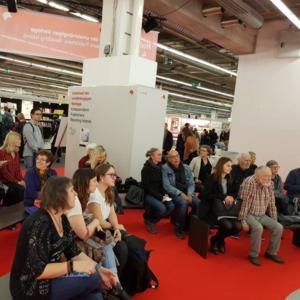
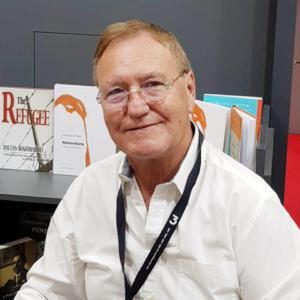
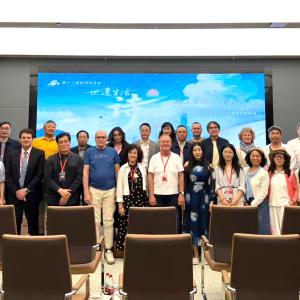
In the photos: At the opening of the poetry festival
From left to right: Zoltán Böszörményi, Macedonian writer Igor Radev, Gejke Marinaj, a professor at the University of Texas, and poet Attila Balázs F.
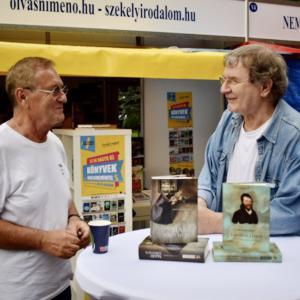
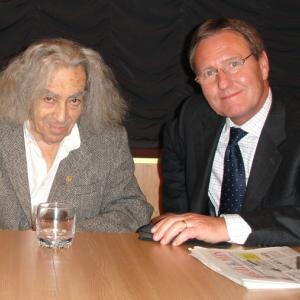
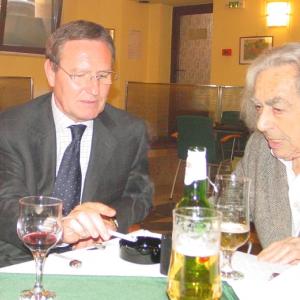
Sinologist Wolfgang Kubin and Zoltán Böszörményi
The opening gala evening
Free downloadable books






Latest news

Interviews

Interviews
Interviews
Audio library
Words from my readers

A great novel!
Last time, on our way back from the Iron Gate and Krassó-Szörény in October, I received Zoltán's latest book, While I Think I Exist, at the Present House.
I read it with great interest, literally all the way through, I could hardly put it down.
Once again, I thank Zoltán and Jelen Publishers for this book. It was like reading a printed online story. A great novel!
With friendship,
Gábor

About Regal
A good novel offers endless possibilities for interpretation/reading. The Regal is such a novel. One of Kinga Lázár's quotes is particularly thought-provoking. "How would I behave in their place?" The question is asked by Tamás, the main character. Yes, it is worth approaching the characters from this point of view, and asking ourselves the question: How would I behave in their shoes?

The skin of nothing
The author handles the words, the Hungarian language and our cultural and literary literacy in a very beautiful, apt, surprising or even disconcerting way - all at the same time. (Moly.hu)